
 Help me choose

The pool was clear at dusk. By breakfast there are June bugs on the floor, moths that circled the light, a few beetles on their backs and, after rain, worms along the shallow end. Insects are a small load compared with leaves, but a relentless one: a fresh delivery every night from spring to fall, and a robotic pool cleaner for bugs has to keep pace with it.
That makes this a scheduling question. Floating insects belong to the skimmer. The ones that sink belong to the robot, and the robot that wins is the one that starts itself daily without being asked. Filter fineness comes next. Behind the two leaders, the Clear S and Dolphin Sigma schedule through apps, and the Dolphin Cayman runs every day in smaller pools.
Five Robots for Bugs, in Ranked Order
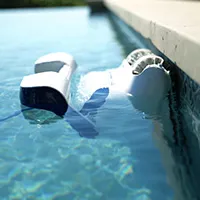
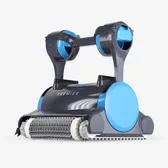
What wins here is the weekly timer on the power supply: one setting for every day, with no phone, no Wi-Fi and nothing to reconnect. Each day the robot runs a 3-hour cycle over floor, walls and waterline, and the Multi-Media system lets you fit standard fine filters for beetles or the included NanoFilters when gnats and wings are the nuisance. The catch: every change is made at the power supply, since there is no remote start, and it sits in the upper part of this group on price.
Best for
In-ground pools up to 50 ft near lights, lawns or trees, cleaned daily with no phone.
Keep in mind
The 3-hour cycle is the longest Dolphin cycle on this page, so allow for it if mornings are swim time.
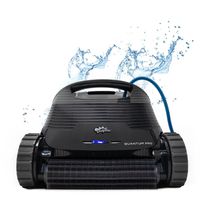
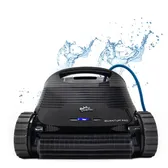
Two ways to schedule is the Quantum's edge: an every-day timer setting on the power supply, plus start, stop and schedules in the myDolphin Plus app over Wi-Fi. Its 2-hour cycle is finished sooner, a full set of NanoFilter panels is included for the small stuff, and the XXL MaxBin basket leaves plenty of room between rinses. It also covers sun shelves and stairs, where worms and beetles collect in shallow water. The catch: flow is 4,000 gallons per hour and the warranty is 2 years.
Best for
Owners who like a hardware timer as the backbone and an app for an extra run after a buggy night.
Keep in mind
The app runs over Wi-Fi, so check that your signal reaches the pool area. The timer works either way.
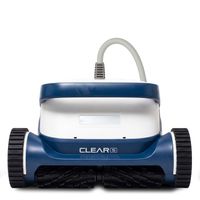
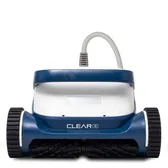
The fine panels in the UltraFilter basket carry a stated 1-micron rating, and that is the spec that matters for insects: fine enough to hold gnats, midges and wing fragments. Pair them with weekly schedules in the Clear app and the Fast mode of 1 hour, and you have a short daily pass that suits a nightly trickle. The robot also scrubs the waterline, where many insects end up. The catch: scheduling is set in the app, and there is no published basket size to compare.
Best for
In-ground pools up to 50 ft troubled by gnats, midges and small flying insects around lights.
Keep in mind
After a night of beetles or worms, swap to the 180-micron coarse panels so the fine ones do not blind.
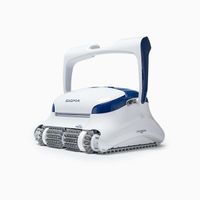
A weekly scheduler by day and time is the Sigma's winning spec here: in the myDolphin Plus app you choose the hour, so the robot can be finished before the first swim. It connects over Wi-Fi and Bluetooth and sends a filter alert. NanoFilters and standard cartridges both come in the box, and SmartNav 3.0 with an onboard gyroscope keeps coverage orderly. The catch: cartridges want rinsing more often than a big basket, and scheduling is done in the app.
Best for
Owners who want to choose the exact hour of the daily cycle from a phone.
Keep in mind
It sits at the top of this group on price. Rinse the cartridges at least weekly in bug season.

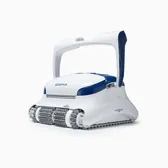
The Cayman's timer has one setting, every day, and for insects that single setting is the right one. Set it and the robot runs a 2-hour cycle daily with no phone involved. The MaxBin basket, 50% larger than standard Dolphin filters, ships with fine panels that hold most insects, and it empties through a top hatch with one tab. It is also the pick on this page for above-ground pools. The catch: NanoFilter panels for gnats are an optional add-on, and the rating stops at pools of 33 ft.
Best for
Above-ground and compact in-ground pools, 33 ft or shorter, that need a no-fuss daily bug run.
Keep in mind
It cleans floor and walls but not the waterline, so insects on the tile line stay for the skimmer or a brush.
Free Shipping30-Day Trial: use it in your pool, return it within 30 days of deliveryLow Price GuaranteeAuthorized dealer with the full manufacturer's warrantyInstallment options, when offered, appear at checkout
What Counts When the Problem Is Insects
-
A Schedule That Runs Every Day
Bugs do not arrive in one storm. They arrive as a steady nightly trickle, so one cycle a day keeps the floor clear while a weekly clean leaves six days of buildup. Look for an every-day setting you can set once and leave, on the power supply or in an app.
-
Fine Filtration for Small Bodies
Beetles are easy. Gnats, ants, midges and loose wings are not: they slip through coarse panels and drift back out. Standard fine media handles most insects and ultra-fine media catches the specks. Robots that include both let you match the filter to what is landing that month.
-
Room Between Empties
Insects take little space, so basket size matters less here than it does for leaves. It still decides how long the robot can work unattended when beetles come down with blossoms or mulch. Do not stretch it far: insects break down quickly in warm water.
-
Reach at the Waterline
Many insects finish up at the waterline, clinging to tile or pressed against the wall. Robots that scrub the waterline work that band on every cycle. Robots that clean floor and walls only leave it to the skimmer and a hand brush.
Scheduling and Filtration at a Glance
| Specification |
Dolphin Premier
Top pick
|
Dolphin Quantum
Pick 2
|
Clear S
Pick 3
|
Dolphin Sigma
Pick 4
|
Dolphin Cayman
Pick 5
|
|---|---|---|---|---|---|
| Price today | $1,949 | $1,599 | $1,749 | $2,349 | $1,049 |
| Filtration | Multi-Media: NanoFilters, oversized leaf bag and standard fine filters | XXL MaxBin basket with standard and NanoFilter panels | UltraFilter basket: 1-micron fine and 180-micron coarse panels | NanoFilters and standard filter cartridges | MaxBin basket with fine panels; NanoFilter panels optional |
| Filter access | Top-load, no tools | Top-load, one-click open | — | Cartridges | Top hatch, one-tab emptying |
| Brushes | Dual scrubbing brushes | Dual HyperBrush | Front and rear active brushes | Quad scrubbing brushes | HyperBrush |
| Flow rate | 4,500 GPH | 4,000 GPH | 8,500+ GPH | 4,500 GPH | Over 4,000 GPH |
| Cycle time | 3 hours | 2 hours | 1, 2 or 3 hours (six modes) | 2.5 hours | 2 hours |
| Cleans | Floor, walls and waterline | Floor, walls, waterline, sun shelves and stairs | Floor, walls and waterline | Floor, walls and waterline | Floor and walls |
| Scheduling | Weekly timer: every day, every 2 days or every 3 days | Weekly timer: every day, every 2 days or every 3 days | Weekly schedules in the Clear app | Weekly scheduler by day and time | Timer: every day |
| Warranty | 3 years | 2 years | 3 years (limited) | 3 years | 2 years |
| Buy | See priceDetails | See priceDetails | See priceDetails | See priceDetails | See priceDetails |
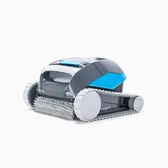
Specifications are the manufacturers' published figures. Prices are live from our store.
Sinkers, Floaters and Live Swimmers
It helps to sort pool insects into three groups, because a robot deals with only one of them.
- Sinkers: beetles, June bugs, drowned moths, ants and worms after rain. Once on the floor or stuck to a wall, they are the robot's job.
- Floaters: anything still on the surface. That is the skimmer's work, helped by a hand net. Running the pump for a few hours around dawn pulls the night's floaters to the skimmer before they sink.
- Live swimmers: water boatmen and backswimmers fly in and swim too well for any cleaner to catch. Boatmen feed on algae and backswimmers hunt other insects, so both point to algae getting started. Deal with the algae and they tend to move on. A robot will not reduce them.
Cut the Nightly Load at the Source
The cheapest improvement is not in the robot at all. Night-flying insects are drawn to light, circle it and drop into the water underneath. Turn pool and patio lights off, or dim them, when nobody is swimming, and far fewer arrive. Where a light has to stay on for safety or security, aim it away from the water if you can.
Worms are a rain problem: they cross the deck when the soil floods and fall in at the shallow end. There is little to do about that except run a cycle the next morning and brush the steps, which most robots do not reach.
Pool Pro Tips for Bug Season
- Pool Pro tip: switch pool and patio lights off when the pool is empty, so fewer night-flying insects are drawn to the water.
- Pool Pro tip: where your robot lets you choose the hour, schedule the daily cycle for early morning so the night's insects are gone before the first swim.
- Fit ultra-fine media when gnats, midges or flying ants are the main arrivals, and go back to standard media when beetles and worms return.
- Leave a scheduled robot in the water between cycles, but lift it out to empty and rinse the filter at least weekly, and always before you shock the pool.
Bug Questions Our Pool Pros Hear Most
Do robotic pool cleaners pick up dead bugs?
Yes. Insects that have sunk to the floor or stuck to the walls are ordinary debris for any robot on this page, and a robotic pool cleaner for bugs mainly needs to run often enough to keep up. Floating insects are different: they stay with the skimmer until they sink.
Will a robot get rid of water boatmen or backswimmers?
No. Both are strong swimmers that fly in and out, and they avoid the robot. Water boatmen feed on algae and backswimmers prey on other insects, so their presence usually means algae is gaining a foothold. Brush, balance the water and treat the algae. Once the food is gone they tend to leave.
Which filter should be in the robot for gnats and tiny insects?
The finest one you have. On the Premier, Sigma and Quantum that means the included NanoFilters; on the Clear S, the 1-micron fine panels; on the Cayman, NanoFilter panels are an optional add-on. Ultra-fine media clogs faster, so rinse it more often and return to standard media when larger insects come back.
Why are there so many bugs in my pool every morning?
Mostly light and water. Insects that fly at night are drawn to pool and patio lights and fall in. Others come to drink or land by mistake, and rain drives worms across the deck. Turning lights off when the pool is not in use is usually the easiest way to cut the load.
Is a daily timer standard or optional on the Dolphin Escape?
Not as standard. The Escape starts when you press the button, which is why it is not on this shortlist. An optional Automation Timer power supply adds automatic runs every 24, 48 or 72 hours. With that fitted it becomes a sound lower-priced choice for bugs in pools up to 33 ft.
Our Call on Robots for Bugs
Decide how you want the daily run to happen, then pick. For a timer you set once at the power supply, choose the Premier, or the Cayman if the pool is 33 ft or under. For a timer plus an app, choose the Quantum. To set the exact hour from a phone, look at the Sigma or the Clear S. Then turn the lights off at night. See the live price on each card, and remember that we price match.
How we pick and how we earn: Pool Express is an authorized dealer and sells every robot recommended in this guide. Picks are ranked for this pool or problem from each robot's published specifications. Prices shown are pulled live from our store and may change. Last updated November 23, 2026.