
 Help me choose
You shocked a green pool and it worked. The water went from green to cloudy blue, and by the next morning a gray-white or tan layer had settled across the floor. That layer is dead algae, and it is some of the finest debris a pool ever holds. Touch it with a brush and it billows. Vacuum it through a sand filter and much of it comes straight back through the returns. The same thing happens inside a robot with standard panels, which is why the best robotic pool cleaner for dead algae is defined by its filter.
Each pick below includes NanoFilter-class media. Our Pool Pros also set out the order of work, because timing matters: the robot stays out of the pool during the shock and goes back in when the chlorine level has come down.
Five Robots for Dead Algae, Ranked
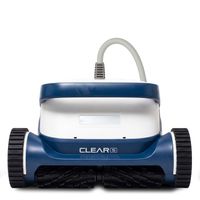
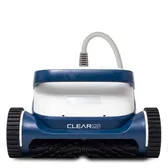
Rated at 1 micron, the fine panels in the Clear S UltraFilter basket carry the tightest published rating on this page, and dead algae needs exactly that grade. Its modes fit the cleanup step by step. Floor only keeps the robot on the settled layer for the first passes. Fast runs a 1-hour cycle, so you can rinse and repeat several times in a morning. Once the floor is clear, Regular takes the film off the walls and waterline with front and rear active brushes.
The catch: 1-micron panels and a heavy layer meet badly. Expect the first cycle to load the filter early.
Best for
Pools up to 50 ft recovering from a green-pool treatment, where the leftover dust is on the floor.
Keep in mind
Not for use during the shock itself. Wait for normal chlorine, and rinse the panels after every pass.

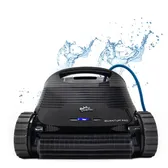
The Premier's full-filter indicator is the detail that earns second place. Dead algae loads NanoFilters long before a cycle ends, and the light on the power supply tells you so from across the yard. Lift the robot out, take the NanoFilters out of the top without tools, rinse, reload and restart: that is the routine this job is made of. Dual scrubbing brushes work the dull film off walls and waterline.
The catch: it runs one program, 3 hours long, and cannot be told to stay on the floor.
Best for
Owners who want the cleanup handled from the power supply and one robot for every season after it.
Keep in mind
No short cycle. Stop the run when the indicator shows full instead of waiting out the 3 hours.
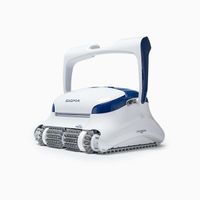
Quad scrubbing brushes give the Sigma third place. After a bloom, the floor is only half the mess: a dull film of dead algae clings to walls, the waterline and the rough spots in plaster, and four brushes backed by three commercial-grade ProLine motors are the most scrubbing on this page. The NanoFilters in the box hold the dust, and the myDolphin Plus app sends a filter alert when they load, which on this job will be early and often.
The catch: cartridges take more care to rinse clean of algae dust than an open basket.
Best for
Plaster and pebble pools where dead algae film clings to walls, and owners who want phone alerts.
Keep in mind
Highest price on the page. Rinse the cartridges thoroughly, or leftover dust goes back into the pool.
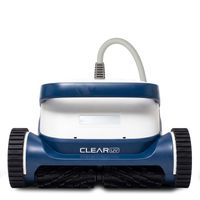
Filtration decides this job, and the Clear UV filters exactly as the Clear S does: 1-micron fine panels in an UltraFilter basket, Floor only and Fast modes for rinse-and-repeat passes, and front and rear active brushes for the film on the walls. The Clear UV adds a built-in UV-C light that you control from the Clear app, and it costs more.
The catch needs saying plainly. We rank this robot on what its filter collects, and we make no claim for the light in an algae cleanup. What is on your floor is a dust-removal job, and your normal sanitizer still does the chemical work.
Best for
Buyers who want the UV-C model and need the same 1-micron dust filtration as the Clear S.
Keep in mind
Costs more than the Clear S, and the difference buys the light, not a faster cleanup.
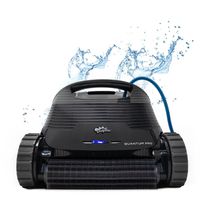
Filter area is the Quantum's advantage on a debris that blocks filters. Its included NanoFilter panels line an XXL MaxBin with over 400 square inches of surface, so the gray dust spreads thin and the robot covers more floor before it needs rinsing. When it does, the basket opens from the top in one click. The 2-hour cycle keeps repeat passes moving, and stairs, sun shelves and Baja ledges, where dead algae settles thickly, are part of its published coverage.
The catch: it has the lowest flow of the five at 4,000 GPH.
Best for
Pools with steps and ledges, and owners who want ultra-fine panels included at a lower price.
Keep in mind
A 2-year warranty. Give dead algae a full night to settle so the robot is not chasing a cloud.
Free Shipping30-Day Trial: use it in your pool, return it within 30 days of deliveryLow Price GuaranteeAuthorized dealer with the full manufacturer's warrantyInstallment options, when offered, appear at checkout
What Matters for Dead Algae Cleanup
-
Ultra-Fine Filtration
Dead algae cells are tiny. Standard panels let much of the dust pass, and you watch it cloud the water behind the robot. NanoFilters, NanoFilter panels and 1-micron panels are the grade that keeps it. Nothing else on a spec sheet matters as much.
-
Knowing When the Filter Has Loaded
This debris blocks a filter fast, often part-way through the first cycle. A warning light on the power supply or an alert on your phone saves you from a robot circling with no suction, and tells you when the rinse is due.
-
Quick Access for Rinse and Repeat
A dead algae cleanup is several short rounds: run, rinse, run again. Filters that lift out without tools make each round shorter, and the less time a rinse takes, the sooner the pool is clear.
-
Brushes That Loosen the Film
Dead algae settles on the floor but also coats walls and steps as a dull film. Active scrubbing brushes knock it loose so the filter can catch it. During the treatment itself, brushing by hand is still your job.
Dead Algae Cleanup Specs Compared
| Specification |
Clear S
Top pick
|
Dolphin Premier
Pick 2
|
Dolphin Sigma
Pick 3
|
Clear UV
Pick 4
|
Dolphin Quantum
Pick 5
|
|---|---|---|---|---|---|
| Price today | $1,749 | $1,949 | $2,349 | $1,999 | $1,599 |
| Filtration | UltraFilter basket: 1-micron fine and 180-micron coarse panels | Multi-Media: NanoFilters, oversized leaf bag and standard fine filters | NanoFilters and standard filter cartridges | UltraFilter basket: 1-micron fine and 180-micron coarse panels | XXL MaxBin basket with standard and NanoFilter panels |
| Filter access | — | Top-load, no tools | Cartridges | — | Top-load, one-click open |
| Brushes | Front and rear active brushes | Dual scrubbing brushes | Quad scrubbing brushes | Front and rear active brushes | Dual HyperBrush |
| Flow rate | 8,500+ GPH | 4,500 GPH | 4,500 GPH | 8,500+ GPH | 4,000 GPH |
| Cycle time | 1, 2 or 3 hours (six modes) | 3 hours | 2.5 hours | 1, 2 or 3 hours (six modes) | 2 hours |
| Cleans | Floor, walls and waterline | Floor, walls and waterline | Floor, walls and waterline | Floor, walls and waterline | Floor, walls, waterline, sun shelves and stairs |
| Scheduling | Weekly schedules in the Clear app | Weekly timer: every day, every 2 days or every 3 days | Weekly scheduler by day and time | Weekly schedules in the Clear app | Weekly timer: every day, every 2 days or every 3 days |
| Warranty | 3 years (limited) | 3 years | 3 years | 3 years (limited) | 2 years |
| Buy | See priceDetails | See priceDetails | See priceDetails | See priceDetails | See priceDetails |
Specifications are the manufacturers' published figures. Prices are live from our store.
The Right Order: Shock, Settle, Then the Robot
A robot is the last stage of an algae treatment, not the first. It does not treat the water, and it should not sit in shock-level chlorine. Its job starts once the algae is dead and lying on the floor.
- Take the robot out before you shock, and keep it out while chlorine is at shock level.
- Brush the walls and floor by hand during the treatment and run the pump, so the chlorine reaches everything.
- When the green is gone, switch the pump off and let the dead algae settle overnight.
- Check that chlorine is back in the normal range, as your test kit and the robot's manual define it.
- Put the robot in with ultra-fine media. Rinse the filter as soon as it loads, and repeat until a cycle comes back nearly clean.
When to Vacuum to Waste First
If the layer is thick enough to hide the main drain, start with a manual vacuum set to waste, if your filter valve has that setting. The dust leaves the pool altogether and never reaches a filter, and a job that would load a robot's filter many times over is done in one slow pass. You lose water and have to top up and rebalance, but you save hours of rinsing.
For a light dusting after a mild bloom, skip the vacuum. Two or three robot cycles with a rinse between each will usually clear it. Either way, clean or backwash the pool's own filter when you finish.
Pool Pro Tips for the Cleanup
- Pool Pro tip: stop the first cycle after half an hour and look at the filter. How heavily it has coated tells you how many passes the pool needs.
- Pool Pro tip: wash the robot itself after an algae cleanup. Hose the brushes, tracks and the inside of the body, not just the filter, before it goes back on its schedule.
- Do not add clarifier or flocculant with the robot in the water. Dose, wait as the label says, and put the robot in afterward.
Dead Algae Questions, Answered
How do I know the algae in my pool is dead?
Color and chlorine tell you. Live algae is green, yellow or black and clings; dead algae turns gray, white or tan and lies loose on the floor. The firmer test is chemical: if the chlorine level holds overnight with little loss and the water is cloudy blue, not green, the treatment has worked and what remains is debris to remove.
How soon after shocking can I put a robotic pool cleaner back in?
When the chlorine reading has come back down to the normal range, not before. That can take a day or several, depending on how hard you shocked, the sun and the pool. High chlorine is no place to park a robot, so keep it out until your test kit agrees. For the exact limits, check the manual for your model.
Why is the water still cloudy after the robot has cleaned the floor?
The floor and the water are two different jobs. The robot collects what has settled; the haze is dead algae still suspended, and that belongs to the pool filter. Run the pump, clean or backwash the filter when its pressure rises, and give it a day or two. If the cloudiness turns green again, retest chlorine: the bloom may not be over.
Can a robotic pool cleaner handle dead algae if my filter has no waste setting?
Yes, and in that case the robot is the better tool. Without a waste option, a manual vacuum sends all the dead algae into your pool filter, which then needs cleaning several times. A robot with ultra-fine media keeps the dust in its own filter, which is far quicker to rinse.
The Pool Express Verdict on Dead Algae
Dead algae is a filter question with a timing rule attached. The filter: buy a robot with ultra-fine media in the box. The Clear S leads on its 1-micron panels and floor-only mode; the Premier follows with NanoFilters and a full-filter indicator; the other three picks hold the dust as well. The timing: robot out for the shock, back in at normal chlorine, rinse after every pass. Unsure where your pool stands? Ask a Pool Pro.
How we pick and how we earn: Pool Express is an authorized dealer and sells every robot recommended in this guide. Picks are ranked for this pool or problem from each robot's published specifications. Prices shown are pulled live from our store and may change. Last updated November 23, 2026.