
 Help me choose
There is no best robotic pool cleaner for natural pools in the approved-by-the-manufacturer sense, and we would rather say so in the first line than the last. Natural swimming pools clean their water with plants and biological filtration instead of chlorine, and the robots here were designed around conventional pools.
What a robot can do is the housekeeping in the swimming zone. Sediment settles on the floor, biofilm coats the walls and leaves sink, and on a smooth EPDM or PVC liner, or a concrete floor, a robot collects all three. The Dolphin Sigma, Dolphin Quantum and Dolphin Cayman follow, and our team of pool professionals placed them on what matters here: control over where the robot goes, fine filtration and how easily it runs often.
Robots for the Swimming Zone, Ranked
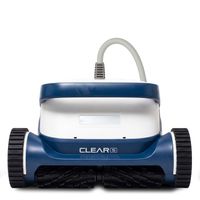
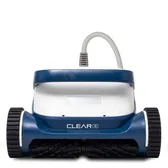
Control is the spec that puts the Clear S first. Floor only mode keeps it off the walls, which is useful where a low wall divides the swimming zone from the plants, and manual joystick driving in the Clear app lets you steer it along a boundary or bring it back. Its UltraFilter basket has a 1-micron fine panel for sediment, and a 1-hour Fast mode suits frequent runs. The catch: it is built for in-ground residential pools with 2.5 to 16.4 ft of water, and nothing in its specs mentions natural pools.
Best for
Lined swimming zones up to 50 ft with at least 2.5 ft of water and an owner who will supervise.
Keep in mind
Not published for natural pools, and shallow planted margins are outside its working depth.

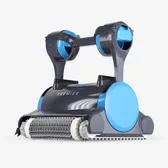
Multi-Media filtration is the Premier's natural-pool spec. NanoFilters are included for fine sediment, the oversized leaf bag is included for the litter a planted pool drops all year, and you swap between them in seconds. Dual scrubbing brushes work on biofilm, and the timer on the power supply runs it every day, every 2 days or every 3 days. The catch: with no modes and no steering, a physical barrier is the one way to keep it out of the regeneration zone, and a 3-hour cycle is long for a small swimming zone.
Best for
Leafy natural pools with a walled-off swimming zone up to 50 ft.
Keep in mind
It goes wherever its navigation takes it, so the planted zone has to be physically separated.
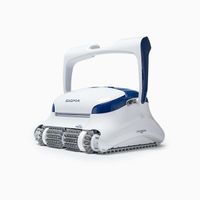
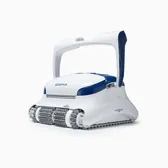
Quad scrubbing brushes are the Sigma's case: biofilm is the constant job in a natural pool, and four brushes scrub more of it per pass than two. NanoFilters come in the box for sediment, and the weekly scheduler in the app sets cycles by day and time, which makes frequent runs easy to keep up. The catch: it is the highest-priced pick here, and it needs a physical barrier between it and the plants. That is a lot of money to commit to a pool type it is not published for.
Best for
Large concrete or lined swimming zones where wall biofilm is the main complaint.
Keep in mind
Highest price of the five for an unpublished use; confirm with your builder first.
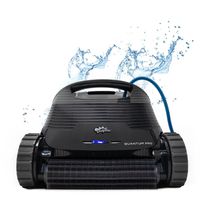
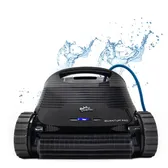
A 2-hour cycle with a full set of NanoFilter panels included is the Quantum's spec here: short enough to run often, fine enough for sediment. The XXL MaxBin basket, with over 400 square inches of filter area, holds a lot of leaf litter, and dual HyperBrush scrubs biofilm at twice standard speed. Its timer runs every day, every 2 days or every 3 days. The catch: its coverage includes sun shelves, Baja ledges and stairs, a plus in a conventional pool and a reason for extra care near a shallow planted margin.
Best for
Swimming zones up to 50 ft with steep, well-defined edges and a tighter budget.
Keep in mind
Built to climb onto shallow shelves, so plant shelves need a barrier; the warranty is 2 years.

The every-day timer is the Cayman's spec for this job. Biofilm comes back fast, and a robot that runs a 2-hour cycle daily from its power supply, with nothing to program, keeps it from building. It is rated to 33 ft, vinyl liner and concrete are on its published surface list, and at 14.6 lb it is easy to lift out and rinse. The catch: NanoFilter panels are an optional add-on you will need for sediment, and it too needs a barrier at the planted zone.
Best for
Swimming zones of 33 ft or less where a short daily clean matters more than features.
Keep in mind
Budget for the NanoFilter panels, and wipe the liner at the water's edge by hand.
Free Shipping30-Day Trial: use it in your pool, return it within 30 days of deliveryLow Price GuaranteeAuthorized dealer with the full manufacturer's warrantyInstallment options, when offered, appear at checkout
What Matters in a Natural Pool
-
Staying in the Swimming Zone
The regeneration zone, with its plants, gravel and substrate, is the pool's filter. A robot that wanders into it vacuums up gravel and disturbs roots. Modes that keep a robot on the floor, manual steering and a physical barrier all help.
-
Fine Filtration for Sediment
Natural pool sediment is very fine, closer to silt than to leaf litter. Standard filters let much of it through and send it back into the water. NanoFilters or a 1-micron panel are the right media.
-
Frequent, Easy Runs
Biofilm on walls and floor returns quickly in water with no sanitizer. Short cycles run often keep it thin. A timer, an app schedule or a fast mode is what makes that realistic week after week.
-
A Clean Robot Going In
Anything on the robot enters a living system. One that has been in chlorinated water, or stored beside pool chemicals, has to be washed thoroughly in fresh water first, filters and cable included.
Filtration, Scheduling and Control Compared
| Specification |
Clear S
Top pick
|
Dolphin Premier
Pick 2
|
Dolphin Sigma
Pick 3
|
Dolphin Quantum
Pick 4
|
Dolphin Cayman
Pick 5
|
|---|---|---|---|---|---|
| Price today | $1,749 | $1,949 | $2,349 | $1,599 | $1,049 |
| Pool type | In-ground | In-ground | In-ground | In-ground | In-ground and above-ground |
| Pool length | Up to 50 ft | Up to 50 ft | Up to 50 ft | Up to 50 ft | Up to 33 ft |
| Cleans | Floor, walls and waterline | Floor, walls and waterline | Floor, walls and waterline | Floor, walls, waterline, sun shelves and stairs | Floor and walls |
| Cable | 59 ft anti-tangle | 55 ft with 360° anti-tangle swivel | 55 ft with 360° anti-tangle swivel | 55 ft with anti-tangle swivel | 50 ft |
| Filtration | UltraFilter basket: 1-micron fine and 180-micron coarse panels | Multi-Media: NanoFilters, oversized leaf bag and standard fine filters | NanoFilters and standard filter cartridges | XXL MaxBin basket with standard and NanoFilter panels | MaxBin basket with fine panels; NanoFilter panels optional |
| Robot weight | — | 20.3 lb | 24.6 lb | 18.3 lb | 14.6 lb |
| Warranty | 3 years (limited) | 3 years | 3 years | 2 years | 2 years |
| Buy | See priceDetails | See priceDetails | See priceDetails | See priceDetails | See priceDetails |
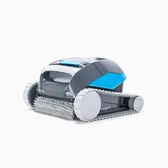
Specifications are the manufacturers' published figures. Prices are live from our store.
Where a Robot Can Go and Where It Cannot
Think of the pool as two rooms. The swimming zone is a lined or concrete basin, and it is the only room a robot enters.
- Yes: smooth PVC or EPDM liner and concrete floors in the swimming zone, where sediment, biofilm and sunken leaves collect.
- No: the planted regeneration zone. A robot there pulls at plants and disturbs the substrate your biological filter depends on.
- No: gravel beds, sand, pebbles or any loose substrate. It goes straight into the filter basket.
- Careful: submerged dividing walls and shallow shelves. Fit a barrier, or use a floor-only mode, so the robot cannot climb over.
Before the Robot Goes In
Wash it. A robot that has run in a chlorinated pool, or sat in a shed beside pool chemicals, carries residue that has no place in a planted system. Rinse the body, brushes, filters and cable in plain fresh water, with no cleaning products, and let it drain.
Then talk to the builder. Ask what the liner is and how its seams are finished, whether the swimming zone is fully separated from the regeneration zone, and how much biofilm removal suits the pool's balance. Read the robot's warranty terms as well; they are written around conventional pools.
How Often to Run It, and What It Will Not Fix
Short and often is the pattern. Start with a cycle every couple of days, look at the walls, and adjust. Empty and rinse the filter straight after each run, because wet organic sludge left in a basket turns foul quickly.
A robot will not clear cloudy or green water. That is the work of the regeneration zone, and a question for your builder. The Clear UV is the Clear S with a built-in UV-C light controlled from the app, at a higher price; the cleaning hardware is the same, so the Clear S is the one we shortlist.
Pool Pro Tips for Natural Pools
- Pool Pro tip: stay beside the pool for the first three cycles. You are checking one thing: whether the robot ever reaches the plants or the gravel.
- Pool Pro tip: run it after wind and storms, when leaves have sunk but have not yet broken down into sludge.
- Rinse the robot, its filters and the cable in plain fresh water before every launch if it is ever stored near pool chemicals.
- Tip the filter contents onto a garden bed, well away from the pool.
Before You Put a Robot in a Natural Pool
Is any robotic pool cleaner approved for natural pools?
None of the robots in this guide is published as approved for natural swimming pools. Their specifications are written for conventional pools. In practice a robot can clean the lined swimming zone, and that is the use this page describes, but check with your builder and read the warranty terms before you rely on it.
Will a robot harm the plants or the biological filter?
It will if it reaches them. A robot in the regeneration zone pulls at plants and vacuums the substrate the filter depends on. Kept to the swimming zone by a wall, a barrier or a floor-only mode, it removes settled sediment and leaves. Ask your builder how much cleaning suits your pool's balance.
How often should a robot run in a natural pool?
More often than in a chlorinated pool, in shorter sessions. Biofilm returns quickly with no sanitizer in the water, so frequent short runs keep it thinner than an occasional long one. The Cayman's daily timer, the Clear S Fast mode and the schedulers on the other picks all make that practical.
Can a robot work on an EPDM rubber liner?
EPDM is not on any published surface list we have, so we cannot promise it. Vinyl liner is listed for the Dolphins, and PVC pond liner is the closest match to that. Seams, folds and soft underlay vary from pool to pool, so ask the liner's installer before the first run.
Our Advice for Natural Pool Owners
Decide first whether a robot belongs in your pool at all: ask the builder, and make sure the swimming zone is separated from the plants. If the answer is yes, the Clear S gives you the most say over where the robot goes, and the Premier is the simpler machine for sediment and leaves. The Sigma earns its price where wall biofilm is the main complaint; the Quantum and the Cayman are the lower-cost routes to short, frequent cleans. Unsure whether your pool suits any of them? Ask a Pool Pro.
How we pick and how we earn: Pool Express is an authorized dealer and sells every robot recommended in this guide. Picks are ranked for this pool or problem from each robot's published specifications. Prices shown are pulled live from our store and may change. Last updated November 23, 2026.