
 Help me choose
Aggregate is a family of finishes, not one surface. At one end is exposed aggregate, where stone stands proud of the cement and the floor has real tooth. At the other is polished aggregate, ground flat until it is nearly as smooth as new plaster. Quartz and glass-bead blends sit between. The best robotic pool cleaner for aggregate pools depends on which of these is under your feet.
The rougher the finish, the more it asks of brushes and the longer a cycle needs to be, because texture hides fine dust. That sets the order of this shortlist: the Sigma and the Premier first, then the Dolphin Quantum and the Clear S, with the Dolphin Cayman for pools of 33 ft and under. The four Dolphins list pebble among their supported surfaces, and aggregate behaves the same way under a robot.
Aggregate Picks, Roughest Finish First
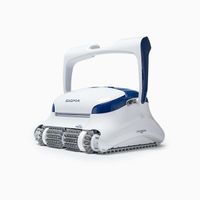
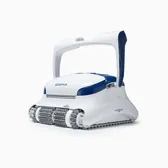
Quad scrubbing brushes make the Sigma the pick for the rough end of the family. On exposed aggregate, where stone stands above the cement, four brushes put bristle on more sides of each stone per pass. Three commercial-grade ProLine motors move 4,500 GPH to carry off the dust, NanoFilters are included to hold it, and a 2.5-hour cycle gives the floor thorough coverage. Pebble is on its published surface list. The catch: it is the highest-priced pick, and on a polished or glass-bead finish you would be paying for brushing the surface does not need.
Best for
Exposed aggregate and any coarse finish where dirt and algae settle around the stones.
Keep in mind
Costs the most and weighs 24.6 lb. Exposed stone will wear all four brushes, so budget for sets.

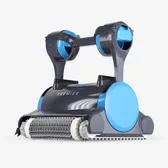
Filtration choice and a 3-hour cycle are the Premier's strengths, and they suit the smooth-to-medium part of the aggregate range best. Polished aggregate and quartz blends do not need four brushes; they need fine dust caught, and the Premier includes NanoFilters alongside standard fine filters, swapped from the top without tools. Dual scrubbing brushes and 4,500 GPH from dual commercial-grade ProLine motors handle moderate texture, and pebble is on its surface list. The catch: on coarse exposed aggregate, two brushes leave more in the texture than four, the one reason it is not first.
Best for
Polished, quartz and glass-bead finishes, and medium-texture pools run on a simple timer.
Keep in mind
Half the brush count of the top pick, and no phone control. A 20.3 lb lift.
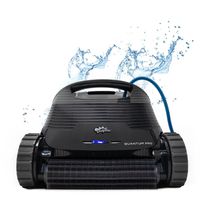
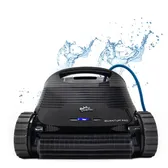
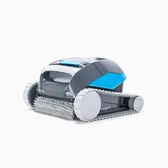
A dual HyperBrush at twice the speed of standard brushes is the Quantum's answer to texture, and on medium finishes such as quartz and glass-bead blends it is plenty. The XXL MaxBin basket of over 400 sq in comes with a full set of NanoFilter panels as well as standard panels, it scrubs the waterline, and pebble is on its surface list. It is also the lowest-priced 50 ft robot on this page. The catch: the cycle is 2 hours. On coarse exposed aggregate, plan on a second run or choose a longer-cycle robot.
Best for
Quartz and glass-bead finishes on a middle budget, especially pools with steps or a sun shelf.
Keep in mind
Short cycle for a coarse floor, and the warranty runs 2 years.
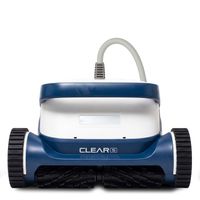
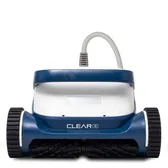
A 3-hour Ultra mode backed by 8,500+ GPH is the Clear S's case: time and flow are what clear the fine dust aggregate holds. Front and rear active scrubbing brushes work the floor in both directions, 1-micron panels in the UltraFilter basket keep the dust, and a 2-hour Regular mode is there for smoother finishes that need less. The catch: the Dolphins publish a surface list that includes pebble, and we cannot point to the same for the Clear. On polished aggregate that hardly matters. On coarse exposed stone, ask a Pool Pro first.
Best for
Smooth and medium aggregate pools up to 50 ft where dust and cloudiness are the complaint.
Keep in mind
Schedules are set in the Clear app. Expect to pay more than for the third pick; the card shows the live price.

Size is what earns the Cayman its place: it is rated for pools up to 33 ft and lists pebble among its surfaces. Its single HyperBrush turns at twice the speed of standard Dolphin brushes, which is enough on polished, quartz and glass-bead finishes, and its MaxBin basket is 50% larger than standard Dolphin filters. At 14.6 lb it is easy to lift from a small pool. The catch: on exposed aggregate one brush is working hard, NanoFilter panels are an optional add-on, and it cleans floor and walls but does not scrub the waterline.
Best for
Small aggregate pools and cocktail pools, particularly with a smoother finish.
Keep in mind
One brush, no waterline scrubbing and a 2-year warranty. Rough finishes in bigger pools need more robot.
Free Shipping30-Day Trial: use it in your pool, return it within 30 days of deliveryLow Price GuaranteeAuthorized dealer with the full manufacturer's warrantyInstallment options, when offered, appear at checkout
Judge the Finish Before the Robot
-
Roughness
Drag a bare foot across the floor. If it slides, the finish is polished and nearly any pick here will clean it. If it catches, you have exposed aggregate, and brush count, brush speed and cycle length all move up the list.
-
Brush Count and Speed
Exposed stone needs bristle on every side of it. Four brushes, or two spinning at double speed, do noticeably more on a coarse floor than a single brush. On a polished floor the difference shrinks to very little.
-
Fine Filtration
Texture traps dust until a brush frees it. Without ultra-fine media that dust passes through the robot and settles back where it came from. NanoFilters or 1-micron panels in the box save buying them later.
-
Cycle Length
A rough floor takes more passes. Favor a 2.5 or 3-hour cycle on exposed aggregate. On polished or quartz finishes a 2-hour cycle is usually enough, and there is no reason to pay for more.
Brushes, Cycles and Filtration Side by Side
| Specification |
Dolphin Sigma
Top pick
|
Dolphin Premier
Pick 2
|
Dolphin Quantum
Pick 3
|
Clear S
Pick 4
|
Dolphin Cayman
Pick 5
|
|---|---|---|---|---|---|
| Price today | $2,349 | $1,949 | $1,599 | $1,749 | $1,049 |
| Brushes | Quad scrubbing brushes | Dual scrubbing brushes | Dual HyperBrush | Front and rear active brushes | HyperBrush |
| Cleans | Floor, walls and waterline | Floor, walls and waterline | Floor, walls, waterline, sun shelves and stairs | Floor, walls and waterline | Floor and walls |
| Traction | HyperGrip tracks | HyperGrip tracks | HyperGrip tracks | — | HyperGrip tracks |
| Pool length | Up to 50 ft | Up to 50 ft | Up to 50 ft | Up to 50 ft | Up to 33 ft |
| Filtration | NanoFilters and standard filter cartridges | Multi-Media: NanoFilters, oversized leaf bag and standard fine filters | XXL MaxBin basket with standard and NanoFilter panels | UltraFilter basket: 1-micron fine and 180-micron coarse panels | MaxBin basket with fine panels; NanoFilter panels optional |
| Robot weight | 24.6 lb | 20.3 lb | 18.3 lb | — | 14.6 lb |
| Warranty | 3 years | 3 years | 2 years | 3 years (limited) | 2 years |
| Buy | See priceDetails | See priceDetails | See priceDetails | See priceDetails | See priceDetails |
Specifications are the manufacturers' published figures. Prices are live from our store.
Where Your Finish Sits on the Roughness Scale
Builders use the word aggregate for several finishes. If you are not sure which you have, the barefoot test is reliable. Smooth and slightly slick is polished. A fine sandpaper feel is quartz or glass bead. Small stones you can feel one by one is exposed aggregate. If the floor and the walls differ, go by the rougher of the two.
Use the table to place yours, then read across. The picks do not change from row to row. What changes is how far down the list you can comfortably go.
| Finish | Feel | What to Prioritize | Robots That Fit |
|---|---|---|---|
| Polished aggregate | Smooth, like plaster | Fine filtration | All five picks |
| Quartz blend | Fine sandpaper | Filtration, then brushing | All five picks |
| Glass-bead blend | Smooth to lightly textured | Filtration and clean brushes | All five picks |
| Exposed aggregate | Individual stones, rough | Brush count and cycle length | Sigma first, then Premier |
What Exposed Aggregate Does to Brushes
Exposed aggregate is the hardest finish on robot brushes. The stones act like a file, and brushes that last several seasons on plaster wear noticeably sooner here. Plan for it: brushes are a routine replacement, and worn ones cost you wall climbing and scrubbing long before they fail outright.
Polished and glass-bead finishes are the opposite. They are gentle on brushes, and the thing to watch is film on the brush surface, which reduces grip. Rinse them. On any aggregate, Ask a Pool Pro which replacement set fits your model.
What a Robot Leaves to You
A robot lifts loose dirt, dust, sand and leaves. It does not reverse what age and chemistry do to aggregate. Calcium deposits between stones, stones that have come loose, rust blooms and mottled color are surface problems for a pool professional. Algae deep in exposed texture needs sanitizer and a stiff brush first; the robot collects what is left afterward. The Escape is not on this page because its published surface list does not include pebble. The Clear UV adds an app-controlled UV-C light to the Clear S at a higher price, and it cleans aggregate no differently.
Pool Pro Tips for Aggregate Finishes
- Pool Pro tip: on exposed aggregate, expect the first cycles to fill the filter fast. Years of settled dust come out of the texture at once, so rinse between runs.
- Pool Pro tip: match the filter to the finish. Ultra-fine media suits polished and quartz floors, where dust is the main debris; use standard media first on exposed stone after a storm.
- Check brushes monthly on exposed aggregate, and once a season on smoother blends.
- After resurfacing or an acid wash, wait for your contractor's go-ahead before the robot goes back in.
Aggregate Finish Questions
Is exposed aggregate too rough for a robotic pool cleaner?
No. The Dolphins on this page list pebble among their surfaces, and exposed aggregate behaves the same way. It does ask more of a robot: more brushes, a longer cycle, and brush sets replaced sooner. A robot with one brush and a short cycle will run, but it will leave more behind.
Does polished aggregate need a different robot than exposed aggregate?
A different priority more than a different robot. Polished aggregate is smooth, so fine filtration and a clean waterline matter most and brush count matters little. Exposed aggregate reverses that. Every pick here cleans a polished finish well; only the first two are our choice for coarse stone.
Does a robotic pool cleaner for aggregate pools differ from one for pebble?
No. Pebble is one kind of aggregate, and a robot treats the two alike. The useful distinction is roughness, not the name on the builder's invoice. A smooth pebble blend and a quartz finish want the same robot; coarse pebble and exposed aggregate want the same robot too.
Will a robot pull stones out of an aggregate finish?
Not from a sound finish. Soft brushes and water flow do not dislodge stones that are properly bonded. If you find loose stones in the filter, the finish was already releasing them, and that is worth showing to a pool professional. The robot is reporting the problem, not causing it.
Aggregate, Decided by Feel
Let your feet choose. If the floor is rough enough to feel each stone, buy brushing: the Sigma first, the Premier second. If it is smooth or lightly textured, buy filtration and convenience: the Premier, the Quantum or the Clear S will all do the job, and the Cayman covers pools of 33 ft or less. On every aggregate finish, fit the ultra-fine filters and keep an eye on the brushes.
How we pick and how we earn: Pool Express is an authorized dealer and sells every robot recommended in this guide. Picks are ranked for this pool or problem from each robot's published specifications. Prices shown are pulled live from our store and may change. Last updated November 23, 2026.