
 Help me choose
Ask ten owners what a concrete pool is and you will hear about poured walls, sprayed shotcrete, a painted shell older than its owner, and bare cement that never saw plaster. The best robotic pool cleaner for concrete pools has to cope with what those shells share: a coarse surface, floors settled out of level, hairline cracks, and a steady supply of grit.
On vinyl, almost any robot scrubs well enough. On concrete, brush count, track grip and filter options decide whether the pool is scrubbed or merely vacuumed. It also matters which robots name concrete on their published surface lists. The Sigma, the Premier and the Dolphin Cayman do. The Dolphin Quantum lists gunite, plaster and pebble, so we recommend it for finished concrete. The Clear S earns its place on brushing and flow.
Five Robots Ranked for Concrete
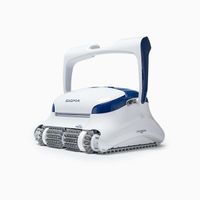
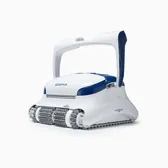
Quad scrubbing brushes are the spec that wins concrete: four brushes put more bristle on a coarse surface per pass than any other robot in this guide. Three commercial-grade ProLine motors move 4,500 GPH, HyperGrip tracks hold on rough and settled floors, and concrete is on its published surface list. NanoFilters and standard cartridges both come in the box for dust and grit. The catch: no pick here costs more, and at 24.6 lb it is the heaviest Dolphin to lift onto the deck.
Best for
Bare, painted or heavily textured concrete where scrubbing matters more than anything else.
Keep in mind
Four brushes on abrasive concrete means four brushes to replace when they wear.

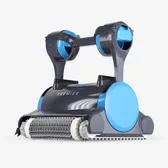
Multi-Media filtration is why the Premier follows so closely. NanoFilters for dust, standard fine filters for everyday use and an oversized leaf bag for coarse loads are all included, and they swap in seconds from the top with no tools. That suits concrete, which throws off sand one week and fine powder the next. A 3-hour cycle gives it long contact with the shell, and concrete is named on its surface list. The catch: two brushes, not four, so on very rough bare concrete it scrubs less per pass than the top pick.
Best for
Concrete pools that shed both grit and fine dust, and owners who prefer a power-supply timer.
Keep in mind
Half the brush count of the first pick, and no phone control. At 20.3 lb it is still a solid lift.
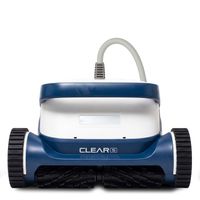
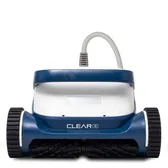
Flow is the Clear S's winning number: 8,500+ GPH through two pump motors, the highest on this page, which helps pull grit out of the texture once the brushes loosen it. Front and rear active scrubbing brushes work the surface from both ends, and the UltraFilter basket pairs 1-micron fine panels with 180-micron coarse panels. The catch: we cannot point you to concrete on a published surface list for it as we can for the two robots above, so for a bare or painted shell, ask a Pool Pro before ordering.
Best for
Plastered or sealed concrete pools up to 50 ft where suction and app scheduling are priorities.
Keep in mind
Confirm bare or painted concrete with us first. Its price usually sits between the fourth pick and the second.
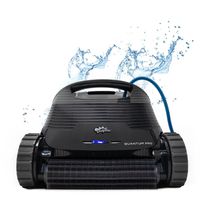
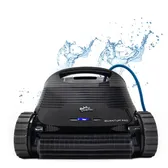
Brush speed is the Quantum's argument: its dual HyperBrush spins at twice the speed of standard brushes, making up in passes what it gives away in brush count. The XXL MaxBin basket tops 400 sq in for grit, a full set of NanoFilter panels is included, and it is the lowest-priced 50 ft robot on this page. The catch explains fourth place: its published surface list names gunite, plaster, pebble and tile, but not concrete as such. We recommend it for concrete with a finish over it, not for a raw or painted shell.
Best for
Concrete shells finished in plaster or pebble, especially pools with steps or a ledge to clean.
Keep in mind
Not listed for raw concrete, and the warranty runs 2 years, a year less than the first two picks.

Concrete on the surface list at a lower price is the Cayman's case. For a concrete pool of 33 ft or less it brings one HyperBrush spinning at twice the speed of standard Dolphin brushes, HyperGrip tracks, and a MaxBin basket 50% larger than standard Dolphin filters that empties through a top hatch. At 14.6 lb it is the lightest Dolphin on this page. The catch: it cleans floor and walls but does not scrub the waterline, and NanoFilter panels for fine dust are an optional add-on.
Best for
Smaller concrete pools, 33 ft and under, where budget matters and the tile line gets brushed by hand.
Keep in mind
No waterline scrubbing, a single brush, a 2-year warranty and a timer that runs every day only.
Free Shipping30-Day Trial: use it in your pool, return it within 30 days of deliveryLow Price GuaranteeAuthorized dealer with the full manufacturer's warrantyInstallment options, when offered, appear at checkout
What Concrete Asks of a Robot
-
Scrubbing Contact
Concrete's open texture holds dirt and algae below the reach of water flow alone. More brushes, or faster ones, mean more bristle passes over every square foot. Compare this first: four brushes, two or one, and how fast they turn.
-
Grip on a Coarse, Uneven Floor
Settled slabs, a patched crack and a steep hopper bottom all test traction. Rubber tracks spread the weight and ride over small ridges. Every Dolphin on this page drives on HyperGrip tracks.
-
Filtration for Grit and Dust
Weathering concrete sheds sand-sized grit and a much finer dust. A robot needs room for the coarse load, a fine medium for the dust, and a filter that rinses quickly, because on concrete you will rinse it often.
-
The Published Surface List
Manufacturers publish the surfaces each robot is built for. For bare or painted concrete, favor models that name concrete. If your concrete sits under plaster or pebble, you are really shopping for that finish, and the list widens.
How the Five Compare on Brushes, Flow and Filters
| Specification |
Dolphin Sigma
Top pick
|
Dolphin Premier
Pick 2
|
Clear S
Pick 3
|
Dolphin Quantum
Pick 4
|
Dolphin Cayman
Pick 5
|
|---|---|---|---|---|---|
| Price today | $2,349 | $1,949 | $1,749 | $1,599 | $1,049 |
| Brushes | Quad scrubbing brushes | Dual scrubbing brushes | Front and rear active brushes | Dual HyperBrush | HyperBrush |
| Cleans | Floor, walls and waterline | Floor, walls and waterline | Floor, walls and waterline | Floor, walls, waterline, sun shelves and stairs | Floor and walls |
| Traction | HyperGrip tracks | HyperGrip tracks | — | HyperGrip tracks | HyperGrip tracks |
| Pool length | Up to 50 ft | Up to 50 ft | Up to 50 ft | Up to 50 ft | Up to 33 ft |
| Filtration | NanoFilters and standard filter cartridges | Multi-Media: NanoFilters, oversized leaf bag and standard fine filters | UltraFilter basket: 1-micron fine and 180-micron coarse panels | XXL MaxBin basket with standard and NanoFilter panels | MaxBin basket with fine panels; NanoFilter panels optional |
| Robot weight | 24.6 lb | 20.3 lb | — | 18.3 lb | 14.6 lb |
| Warranty | 3 years | 3 years | 3 years (limited) | 2 years | 2 years |
| Buy | See priceDetails | See priceDetails | See priceDetails | See priceDetails | See priceDetails |
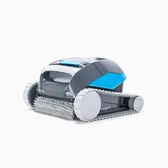
Specifications are the manufacturers' published figures. Prices are live from our store.
Bare, Painted or Plastered: Which Concrete Do You Have?
Concrete is a structure before it is a surface. Most in-ground concrete pools are finished in plaster, pebble or tile, and the robot touches the finish, not the shell. If that is your pool, every pick here is a candidate. Bare and painted concrete are different: the robot runs on the shell itself, which is rougher and dustier.
For a bare or painted shell, stay with the robots that name concrete: the Sigma, the Premier or, in pools up to 33 ft, the Cayman. The Escape does not name concrete on its list, which is why it is absent here. The Clear UV is left off because it cleans concrete exactly as the Clear S does; what it adds is a built-in UV-C light controlled from the app, for more money.
Cracks, Settled Floors and What a Robot Will Not Fix
Old concrete moves. A robot on tracks rides over a hairline crack or a patched seam without trouble. A raised lip, a spalled patch or a crack wide enough to catch a brush is another matter: the robot may hang there or skip the area, and no model solves that.
A robot also does not seal, treat stains or resurface. Rust spots, dark staining and a pitted floor are repair jobs. During an algae treatment you still brush by hand and keep the sanitizer where it should be; the robot helps afterward by collecting what the brushing leaves behind.
Brush Wear Is Part of Owning a Concrete Pool
Concrete is abrasive, and brushes pay for it. Expect them to wear faster than they would on vinyl or fiberglass, and faster on a bare shell than on smooth plaster. Brushes are replaceable parts, not a sign of a failing robot. Worn brushes scrub less and grip walls less well, so a robot that stops climbing after a few seasons often needs a brush set, not a repair. Not sure which set fits your model? Ask a Pool Pro and have the model name handy.
Pool Pro Tips for Concrete Pools
- Pool Pro tip: brush the walls by hand once before the robot's first run. It knocks loose the settled dust, so the first cycles do not choke the fine filter.
- Pool Pro tip: start with the coarser filter media, then switch to NanoFilters or fine panels once the heavy grit is out.
- Rinse the filter after every cycle for the first two weeks. Concrete grit is heavy and packs into pleats and mesh if left to dry.
- Check the brushes whenever you rinse the filter. Flattened or thinning bristles mean it is time to order a set, before wall climbing suffers.
Concrete Pool Questions, Answered
Does a robotic pool cleaner for concrete pools need special brushes?
Not for the robots that list concrete. The brushes they ship with are made for the surfaces on their published lists. What concrete changes is the replacement interval: an abrasive shell wears bristles sooner than a liner does, so check them through the season.
How often should a robot run in a concrete pool?
Two or three cycles a week keeps grit from building up in most concrete pools. The Premier's timer handles every day, every 2 days or every 3 days from the power supply. The Sigma schedules by day and time in its app. The Cayman's timer runs every day only.
Can a robot handle a pitted or uneven concrete floor?
It will clean it, with limits. Tracks cope well with gentle dips, slopes and coarse texture. Deep pits hold dirt below brush reach, and sharp ledges can stop a robot. Expect trouble spots wherever the surface has actually broken up.
Why does the filter fill with sandy grit after every cycle?
Usually because the surface is shedding. Aging concrete and worn plaster release sand-sized particles, and the robot collects them. If the amount keeps growing month to month, have the surface inspected. Sand can also blow in or return from a damaged sand filter.
Is gunite the same as concrete when choosing a robot?
Structurally, yes: gunite and shotcrete are sprayed concrete. Look at what the robot actually touches. Bare gunite behaves like bare concrete; gunite under plaster behaves like plaster. The Sigma, Premier and Cayman name both gunite and concrete; the Quantum names gunite and the common finishes.
Our Call on Concrete
Decide by how much raw concrete the robot will touch. On a bare or painted shell, choose the Sigma for maximum scrubbing, the Premier if filter flexibility and a simple timer matter more, or the Cayman when the pool is 33 ft or under. Where the concrete sits under plaster or pebble, the Clear S and the Quantum join the list, and features and the live price can decide. Whichever you choose, budget for brushes as a wear item.
How we pick and how we earn: Pool Express is an authorized dealer and sells every robot recommended in this guide. Picks are ranked for this pool or problem from each robot's published specifications. Prices shown are pulled live from our store and may change. Last updated November 23, 2026.