
 Help me choose

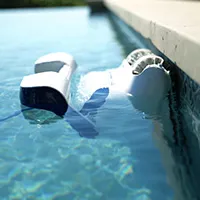
Owners shopping for the best robotic pool cleaner for glass tile pools ask two questions before anything else: will a robot scratch the tile, and will it stay on the wall? The honest answers are no and maybe. The brushes on these robots are soft PVC, not abrasive, and they do not scratch glass tile in normal use. But polished glass is the slickest surface in pool building, and it is where wall climbing is least certain.
So the robot to try first is the one with the most brush contact and traction that also scrubs the waterline: the Premier, the Sigma, then the Dolphin Quantum and the Clear S. The Dolphin Cayman covers small pools, floor and walls only. None of them publishes glass tile by name, which is why this page comes with a test routine.
Our Shortlist for Glass Tile, With Caveats
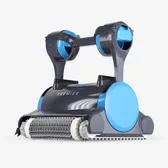
The Premier goes first because it gives a slick wall a long look: a 3-hour standard cycle, waterline included, with dual scrubbing brushes and HyperGrip tracks in contact the whole time. Tile is on its published surface list. It also costs less than the runner-up, a fair consideration when no robot's grip on glass can be promised. The catch: it may still slip near the top of a polished wall, and you will not know until you watch it.
Best for
Glass-tile waterlines and fully tiled pools up to 50 ft, with an owner willing to watch the first cycle.
Keep in mind
No wall-climbing promise on glass. Controls are on the power supply, and it weighs 20.3 lb.
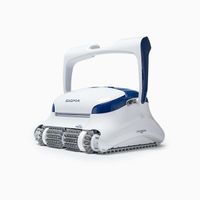
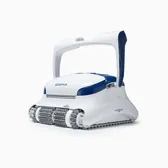
Quad scrubbing brushes give the Sigma more contact with the wall than any other pick here, and contact is what a robot has to work with on glass. Three commercial-grade ProLine motors and HyperGrip tracks back that up, and it scrubs the waterline on a 2.5-hour cycle. Tile is on its surface list. The catch: it asks the most money of any pick on the page, weighs 24.6 lb, and is still not certain to hold the top of a glass wall, which is why it follows a lower-priced robot.
Best for
All-glass shells and large glass mosaics where maximum brush contact is worth paying for.
Keep in mind
The most money at stake if your particular glass proves too slick near the waterline.
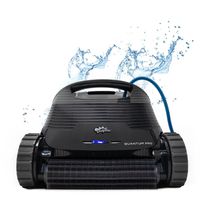
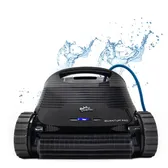
Coverage earns the Quantum third place: it is the one pick whose published list includes stairs, sun shelves and Baja ledges, which in a glass tile pool are often the showpiece. It also scrubs the waterline, lists tile, and runs a dual HyperBrush at twice the speed of standard brushes on HyperGrip continuous rubber tracks. NanoFilter panels come included. The catch: a 2-hour cycle gives the walls less time than the two robots above, and glass ledges are slick enough that you should watch how it handles them before trusting a schedule.
Best for
Glass tile pools with tiled steps or a sun shelf, on a middle budget.
Keep in mind
Shorter cycle and a 2-year warranty. Watch its first run on any shallow glass ledge.
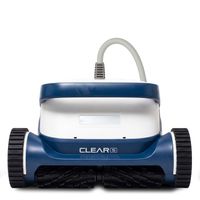
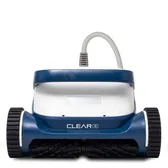
Control is what the Clear S brings to glass: six modes, including Floor only and Waterline only, plus manual joystick driving in the Clear app. If it climbs your glass well, run the full cycle. If the upper wall proves too slick, set it to Floor only and it still earns its keep. Front and rear active scrubbing brushes and 8,500+ GPH of flow do the cleaning. The catch: we cannot cite tile on a published surface list for it as we can for the Dolphins, so it ranks behind them.
Best for
Owners who want to choose where the robot works, from a phone, once they see how it grips.
Keep in mind
Ask a Pool Pro before choosing it for glass, and see the live price on the card before comparing it with the Dolphins.

For a small glass tile pool of 33 ft or less, the Cayman's case is weight and price: at 14.6 lb it is the lightest Dolphin here, it lists tile, and it costs less than the four robots above. One HyperBrush at twice the speed of standard Dolphin brushes and HyperGrip tracks clean floor and walls. The catch: it does not scrub the waterline, so the band stays yours to wipe, and like the others it comes with no promise about grip on glass walls.
Best for
Plunge pools, spools and other small glass-tiled pools whose owners wipe the tile line by hand.
Keep in mind
No waterline scrubbing, a single brush and a 2-year warranty. Not for pools longer than 33 ft.
Free Shipping30-Day Trial: use it in your pool, return it within 30 days of deliveryLow Price GuaranteeAuthorized dealer with the full manufacturer's warrantyInstallment options, when offered, appear at checkout
What Matters on Glass
-
Brush Material and Cleanliness
Soft PVC brushes do not scratch glass. Grit is the risk worth managing: a grain of sand caught in a brush is harder than the bristle around it. Rinsing the brushes matters more on glass tile than on any other surface.
-
Traction on the Upper Wall
Tracks and brush contact hold a robot on a wall. Glass gives both less to grip than plaster or ceramic does, and a slip, when it happens, usually comes near the top.
-
Waterline Scrubbing
Glass shows water spots, sunscreen film and scale more than ceramic does. A robot that reaches and scrubs the waterline saves the most hand work, provided it can hold there. That is the capability to test first.
-
What Is Actually Published
No robot here lists glass tile specifically. The Dolphins list tile; treat that as a category match, not a promise for your particular glass. Small mosaic, with its many grout joints, generally offers more grip than large smooth panels.
Brush Contact, Traction and Waterline Specs
| Specification |
Dolphin Premier
Top pick
|
Dolphin Sigma
Pick 2
|
Dolphin Quantum
Pick 3
|
Clear S
Pick 4
|
Dolphin Cayman
Pick 5
|
|---|---|---|---|---|---|
| Price today | $1,949 | $2,349 | $1,599 | $1,749 | $1,049 |
| Brushes | Dual scrubbing brushes | Quad scrubbing brushes | Dual HyperBrush | Front and rear active brushes | HyperBrush |
| Cleans | Floor, walls and waterline | Floor, walls and waterline | Floor, walls, waterline, sun shelves and stairs | Floor, walls and waterline | Floor and walls |
| Traction | HyperGrip tracks | HyperGrip tracks | HyperGrip tracks | — | HyperGrip tracks |
| Pool length | Up to 50 ft | Up to 50 ft | Up to 50 ft | Up to 50 ft | Up to 33 ft |
| Filtration | Multi-Media: NanoFilters, oversized leaf bag and standard fine filters | NanoFilters and standard filter cartridges | XXL MaxBin basket with standard and NanoFilter panels | UltraFilter basket: 1-micron fine and 180-micron coarse panels | MaxBin basket with fine panels; NanoFilter panels optional |
| Robot weight | 20.3 lb | 24.6 lb | 18.3 lb | — | 14.6 lb |
| Warranty | 3 years | 3 years | 2 years | 3 years (limited) | 2 years |
| Buy | See priceDetails | See priceDetails | See priceDetails | See priceDetails | See priceDetails |
Specifications are the manufacturers' published figures. Prices are live from our store.
Will a Robot Scratch Glass Tile?
In normal use, no. The brushes are soft PVC and non-abrasive, the tracks are rubber, and neither is harder than glass. What deserves attention is what the robot might carry. Sand, a pebble from the landscaping or a chip of grout caught in a brush gets dragged along with it.
The fix is routine, not worry. Rinse the brushes and tracks when you rinse the filter, and net out obvious grit after a storm before sending the robot in. If your installer gave care instructions for the glass, follow them first; they outrank general advice.
How to Run a Test Cycle
A robot that cleans the floor and most of the wall but slips on the top foot is still doing most of the work. Whether that is enough depends on your pool, and the only way to find out is to watch one full cycle before you rely on a schedule:
- Clean the brushes and start with an empty filter, so grip and flow are at their best.
- Watch the first three or four wall climbs. Note how high it gets and whether it holds at the waterline or slides back.
- Look at corners and any curved glass, where contact is smallest.
- If it slips in the same place every time, note where and call us before running it again.
What a Robot Will Not Do for Glass Tile
Glass shows everything: water spots, scale haze, a smear of sunscreen. A robot scrubbing the waterline loosens soft film. It does not polish, and it does not remove calcium that has dried onto the glass. Scale on glass tile is a job for the cleaner your installer recommends, never an abrasive pad. Algae in the grout needs sanitizer and a soft hand brush first. The Escape, like the last pick here, cleans floor and walls only, so it is not on this page.
Pool Pro Tips for Glass Tile
- Pool Pro tip: rinse the brushes and tracks every time the robot comes out. On glass, a clean brush grips better and carries no grit.
- Pool Pro tip: Ask a Pool Pro about brush options for slick surfaces before you order, and say whether your glass is mosaic or large format.
- Empty the filter before each run during the first weeks. Full flow helps hold a robot against a wall.
Glass Tile Questions
Is any robotic pool cleaner for glass tile pools certified for that surface?
Not in this guide. None of these robots names glass tile on its published surface list. The Dolphins list tile, which is the closest category. That is why we call these picks the best candidates and not certified matches, and why a watched test cycle matters.
Why would a robot slip on glass tile but not on ceramic?
Polished glass is smoother than glazed ceramic, and it is often laid in larger pieces with fewer grout joints, so tracks and brushes find less to hold. Film from sunscreen makes it worse. A robot that climbs ceramic or plaster without trouble can still slide on the upper part of a glass wall.
Can a robot be kept on the floor if it slips on glass walls?
With some models, yes. The Clear S has a Floor only mode, and the Quantum's app offers a choice of cleaning modes. For the other Dolphins, check the manual for the options on your power supply or app before you buy with that plan in mind.
Is the Clear UV a better choice for glass tile than the Clear S?
It is the same robot with a built-in UV-C light controlled from the app, at a higher price. The light has no bearing on how the robot grips or scrubs glass, so the choice between the two comes down to budget and whether you want that feature.
Our Honest Verdict on Glass Tile
No robot comes with a promise for glass, so buy the one with the best chance and test it. That is the Premier for most pools, the Sigma if you want the most brush on an all-glass shell, the Quantum where glass steps and ledges matter, and the Clear S if you want mode control. For a small pool where you will wipe the tile line yourself, the Cayman is enough. Watch the first cycle, keep the brushes clean, and call us if it slips.
How we pick and how we earn: Pool Express is an authorized dealer and sells every robot recommended in this guide. Picks are ranked for this pool or problem from each robot's published specifications. Prices shown are pulled live from our store and may change. Last updated November 23, 2026.